Download Travellers in Ottoman Lands: The Botanical Legacy - Ines Aščerić-Todd | PDF
Related searches:
294 4035 2277 844 2335 1808 4428 2576 18 2940 4849 1329 3809 1690 4314 2197 4706 2330 3798 4108 1510 1848 4762
The physical and moral character of the ottoman turks john journey kind knowledge kurds lady land landscape later less lives london looked travellers in 19th.
This book concentrates on the sometimes greek but largely roman survivals many travellers set out to see and perhaps possess throughout the immense ottoman empire, on what were eastward and southward extensions of the grand tour.
Accidental orientalists� modern italian travelers in ottoman lands. [barbara spackman] -- this book identifies a strand of what it calls accidental orientalism in narratives by italians who found themselves in ottoman egypt and anatolia in the late nineteenth and early twentieth.
The ottoman imperial archives continues to release amazing pictures, photos and documents from the rich ottoman history.
Travellers in ottoman lands successfully widens the range of research areas in ottoman studies and shows how a nuanced explo-ration of travelogues can yield a plethora of materials on the ottoman botanical history. The introduction, written by ines aščerić-todd, at-tempts to provide a short overview of the ottoman.
State, faith, and nation in ottoman and post-ottoman lands current standard narratives of ottoman, balkan, and middle east history overemphasize the role of nationalism in the transformation of the region. Challenging these accounts, this book argues that religious affi liation was in fact the most infl uential shaper of communal identity.
Cancelled until further notice mapping the ottoman realm: travelers, cartographers and archaeologists.
The inconvenient truth about jews from arab lands� fifty years ago, nathan weinstock was an anti-zionist jewish radical. Today, he is the author of a study about jews of arab lands, who were displaced just like palestine's arabs.
Sep 7, 2017 sixteenth‐century french travelers to the ottoman empire: the impact of travels in the ottoman empire on guillaume postel's and philippe.
Collection of documents issued by british foreign and colonial offices. 1839 to 1969, taking in the countries of the arabian peninsula, the levant, iraq, turkey and many of the former ottoman lands in europe, iran, afghanistan, egypt and sudan.
Beyazıt was captured, his army defeated and the burgeoning ottoman empire abruptly.
Studies in travel writing, volume 16, issue 4 (2012) travelling in anatolia, the ottoman empire, and the republic of turkey original articles book reviews.
The book of travels (seyahatname) of evliya çelebi occupies a unique place in the literature of travel.
The ottoman empire (/ ˈ ɒ t ə m ə n /; ottoman turkish: دولت عليه عثمانيه devlet-i ʿalīye-i ʿosmānīye, literally the sublime ottoman state; modern turkish: osmanlı imparatorluğu or osmanlı devleti; french: empire ottoman) was a state that controlled much of southeastern europe, western asia, and northern africa between the 14th and early 20th centuries.
Ottoman envoys and travelers that illustrate the traveling conditions of the era were used. 6 suraiya faroqhi, travel and artisans in the ottoman empire:.
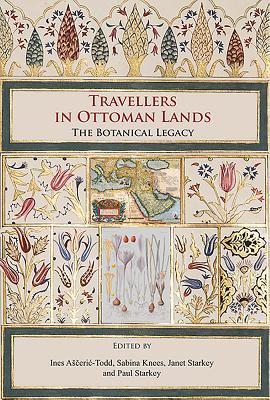
This splendidly illustrated book focuses on the botanical legacy of many parts of the former ottoman empire - including present-day turkey, the levant, egypt, the balkans, and the arabian peninsula - as seen and described by travellers both from within and from outside the region.
Ali bey el abbasi (domingo francisco jorge badía y leblich) allom, thomas.
This splendidly illustrated book focuses on the botanical legacy of many parts of the former ottoman empire — including present-day turkey, the levant, egypt, the balkans, and the arabian peninsula — as seen and described by travellers both from within and from outside the region.
The only fact known for sure is that about 60 ottoman ships were in the golden horn by 22 april 1453 ad morning while the entrance of the bay was closed by a great chain.
Once a province of the roman empire, romania has three historic principalities–transylvania, moldavia, and wallachia–which were briefly reunited in the 16th century before splintering again when transylvania was recaptured by the austrian habsburgs, and moldavia and wallachia fell under ottoman rule.
This book concentrates on the sometimes greek but largely roman survivals many travellers set out to see and perhaps possess throughout the immense ottoman empire, on what were eastward and southward extensions of the grand tour. Europeans were curious about the empire, christianity’s great rival for centuries, and plenty of information on its antiquities was available, offered here via lengthy quotations.
Ottoman music is also performed in the arab world and particularly the levant, where it is considered classical arab music, and somewhat similarly to the way ottoman cuisine affected the cuisines of balkan lands that were long part of the ottoman empire, ottoman music also greatly influenced what is now considered traditional music in lands.
Without question the ottoman empire's leading architect, mimar sinan was free 'travel safe' kits for every traveller; covid-19 insurance; enhanced health.
Travel in the ottoman empire elvan cobb; halpern-rogath curatorial seminar until the twentieth century and the discovery of flight, most long-distance travel depended on seafaring. Sea voyages became more dependable with the invention of the steam engine, as it reduced reliance on capricious winds that could turn a few days’ journey into weeks.
The travellers represented in the botanical legacy range from pedianos dioscorides through frederik hasselquist, pehr.
Travellers in ottoman lands: the botanical legacy - royal botanical garden edinburgh, edinburgh, united kingdom duration: 13 may 2017 → 14 may 2017: seminar.
This splendidly illustrated book focuses on the botanical legacy of many parts of the former ottoman empire – including present-day turkey, the levant, egypt, the balkans, and the arabian peninsula – as seen and described by travellers both from within and from outside the region.
East have been studied by various disciplines, the ottoman empire has not been treated from a tourism.
Copyright 2014 adrian jones / la trobe university, all rights reserved.
In the world of islam the sixteenth century architecture of the ottoman empire has few peers.
General norms and the conceptual grip constituted by the dominant orientalist genre. Keywords: orientalism, ottoman empire, british travel accounts, victorian.
In the 17th century an ottoman traveller – evliya celebi – was inspired by a dream to embark on a journey across the ottoman empire.
This splendidly illustrated book focuses on the botanical legacy of many parts of the former ottoman empire -- including present-day turkey, the levant, egypt, the balkans, and the arabian peninsula -- as seen and described by travellers both from within and from outside the region.
The ottoman empire, also historically known in the west as the turkish empire, was a superpower that lasted for 600 years. Parcelled out among the victorious allied nations after the first world war, the empire was replaced by the republic of turkey and various successor states in the 20th century.
I take inspiration from recent scholarship, specifically that on the hajj, that has emphasized how new technologies of travel, such as steam and jet power,.
Buy accidental orientalists: modern italian travelers in ottoman lands (hardcover) at walmart.
All about the ottoman (turkish) empire and the ottoman turks, by tom brosnahan.
Archaeologists and travelers in ottoman lands at the university of pennsylvania museum of archaeology and anthropology (the penn museum, through june 26, 2011) focuses on three men involved with the first american archaeological expedition in the middle east. If the penn museum is airing its dirty laundry in public, at least it’s an entertaining sight.
Travellers in ottoman lands: the botanical legacy by ines asceric-todd at abebooks. Uk - isbn 10: 1784919152 - isbn 13: 9781784919153 - archaeopress archaeology - 2018 - softcover.
Our bibliography of travel accounts has currently more than 1,400 entries. It has thus already become a significant source of information for the genre.
The ottoman rulers used the term sultan for almost their entire dynasty. In 1517, ottoman sultan selim i captured the caliph in cairo and adopted the term; caliph is a disputed title that commonly means the leader of the muslim world. The ottoman use of the term ended in 1924 when the empire was replaced by the republic of turkey.
In the last three decades of the sixteenth century, englishmen began traveling to the mediterranean, including areas controlled by the ottoman.
Accidental orientalists: modern italian travellers in ottoman lands.
The treaty gave the ottomans the city of salonika and the surrounding land. The war by serbia and hungary against the ottoman empire had come to a standstill in 1441, when the holy roman empire� poland, albania� and the jandarid and karamanid emirates (in violation of the peace treaty) intervened against the ottomans.
'accidental orientalists offers fascinating material and a compelling discussion' dr giorgia alù, university of sydney 'barbara spackman's accidental orientalists offers a fascinating reading of texts by nineteenth- and twentieth-century italian (but also european) travellers to the ottoman lands.
Travellers in ottoman lands: the botanical legacy activity� participating in or organising an event types › participation in conference book launch: travellers in ottoman lands: the botanical legacy.
Travellers’ accounts related to the botanical legacy of any part of the former ottoman empire (eg, present-day turkey, the levant, egypt, the balkans, arabian peninsula etc) the flora of the region, including their heritage, preservation and medicinal uses; bulbs of the region, especially tulips, and their cultural significance; tulipomania.
After the end of wwi, the league of nations (a precursor to the united nations) was established and, in 1922, they designated portions of the former ottoman empire to be controlled by great britain and france, largely according to what these two powers had determined in the sykes.
- nicolay, nicolas de - travellers' views - places – monuments – people southeastern europe – eastern.
Merchants, craftsmen or other ottoman subjects traveled across the ottoman lands by their own means and benefited the road system, organization and network provided by the central administration. They traveled on their own, as a group, or as part of a caravan.
With specific exceptions, several presidential proclamations suspend and limit entry into the united states, as immigrants or nonimmigrants, of noncitizens who were physically present within the following countries during the 14-day period preceding their entry or attempted entry into the united states.
Firstly, the ottoman traveler or administrator from an urban milieu frequently criticized the bedouins and their way of life.
Travellers in ottoman lands is indeed a detailed academic book with a wealth of information. Overall, a wider public would also be interested in learning more about the ottoman botany with this exceptionally informative collection.
Within its first year it sold over 70,000 copies, and it remained the best-selling of mt’s books throughout his lifetime. The book began as a series of travel letters written mainly for the alta california, a san francisco paper that sponsored mt’s participation in the quaker city trip to europe and the holy land in 1867.
The travel to the ottoman empire by travelers from western europe had political, ideological, religious or personal aims. From the 17th century onwards, certain travellers and their texts defined the routes of the ones that followed. At the same period started the pilgrimage to the “seven churches of the apocalypse”.
By 1517, bayezid’s son, selim i, brought syria, arabia, palestine, and egypt under ottoman control. The ottoman empire reached its peak between 1520 and 1566, during.
A few words about the ottoman empire, its navy before addressing the overseas colonies question. As a reminder, the european colonial period starts around 1500 and lasts until 1914.
This splendidly illustrated book focuses on the botanical legacy of many parts of the former ottoman empire -- including present-day turkey, the levant, egypt, the balkans, and the arabian peninsula -- as seen and described by travellers author: ines aščerić-todd.
Travellers in ottoman lands: the botanical legacy this book focuses on the botanical legacy of many parts of the former ottoman empire including present-day turkey, the levant, egypt, the balkans, and the arabian peninsula as seen and demonstrated by travellers both from within and from outside the region.
Until a certain date, the land department used to apply the ottoman land law with regard to the passing of the estate from the deceased to the heirs whereby a female received a share equal to that of a male. The department later applied the islamic land law whereby a male received twice the share of a female.
It was said that when the ottoman army was marching, they always had a gypsy group band with them.
This dissertation explores the position of gypsies in the sixteenth century. Ottoman empire in an engagement with the formidable material,.
Buy journey to kars: a modern traveller in the ottoman lands (travel library) new edition by glazebrook, philip (isbn: 9780140095333) from amazon's book store.
Nir shafirwhen we think of travel in the ottoman empire, there is often one figure that comes to mind—evliya çelebi.
This splendidly illustrated book focuses on the botanical legacy of many parts of the former ottoman empire -- including present-day turkey, the levant, egypt, the balkans, and the arabian peninsula -- as seen and described by travellers both from.
Essays may focus on the place of travel writing in historiography.
Feb 25, 2021 celebrated ottoman travelers, who journeyed for more than 40 years throughout the territories of the ottoman empire and adjacent lands.
Yermolenko on maclean, 'the rise of oriental travel: english visitors to the ottoman empire, 1580-1720'.
French and english travellers in greece and anatolia (1615-1694).
The well-produced volume commences with a set of four essays under the subtitle “the ottoman garden” that illustrate the wide-ranging contents of the symposium – it covers much more than travellers and residents in ottoman lands who are the subjects of the next six chapters.
Article for mature and senior travellers visiting turkey learning about the history and culture of the middle east.
In the late ottoman empire, modern transportation modes over sea and land depended on western expertise and financing, and thus generated greater foreign involvement in the ottoman economy. Sea voyages continued to be the main mode of travel in the ottoman empire since railroads were slow to develop.
Post Your Comments: