Read Textile Processing and Properties: Preparation, Dyeing, Finishing and Performance (Textile Science and Technology) - Tyrone L. Vigo | PDF
Related searches:
Textile Fibers, Dyes, Finishes And Processes - Caribbean
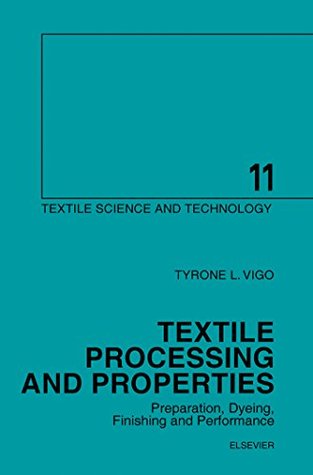
Textile Processing and Properties: Preparation, Dyeing, Finishing and Performance (Textile Science and Technology)
Enzyme-based solutions for textile processing and dye contaminant
Chitosan Application in Textile Processing and Fabric Coating
Amazon.com: Textile Processing and Properties: Preparation
Textile Processing and Properties, Volume 11 - 1st Edition
Textile Processing and Properties, Volume 11: Preparation
0444882243 - Textile Processing and Properties: Preparation
Textile Science and Technology Textile Processing and
Textile Processing and Properties: Volume 11 : T.L. Vigo
Textile quality and biotechnology Project IC-COST CORDIS
Textile processing and properties – preparation, dyeing
Textile Fibers, Dyes, Finishes, and Processes : a Concise Guide
Mechanical Properties of Textile Fibers and Textile Materials
Silk: Processing, Properties and Applications - K. Murugesh
Polypropylene Fiber: Properties, Manufacturing Process and
Sources, origins and properties - Textiles: Sources and properties
An Overview of Textiles Processing and Related Environmental
Spun bonding technology and fabric properties: A review
Textile Processing and Properties: Volume 11 by T.L. Vigo
Lea Textile Processing and Properties de T.L. Vigo en línea
Textile Adviser: BASIC CHARACTERISTICS AND PROPERTIES OF
(PDF) Polyethylene Maufacturing and its Properties Abdul
Thermal and Mechanical Properties of Different Textile Fabrics
Textiles: Types, Properties, Production, Uses And Care
Lisez Textile Processing and Properties de T.L. Vigo en ligne
4536 2408 4059 4833 3376 4977 2390 482 1623 1782 3074 4042 2837 2201 4026 3270 1249 4950
Apr 17, 2017 the process of making spun bond fabrics combines the production of fabrics with the production of filaments.
Chemical fibers, fiber manufacturing technology, principles of textile design, structure, properties and processing of textile materials, measurement technology.
Feb 19, 2018 developments in morphologically derived fibers exhibiting structural coloration based on the interference properties of light could eliminate need.
Abdul azeem/textile chemical processing/ntu polyethylene it is a polymer of ethylene, ch2-ch2, having the formula (-ch2-ch2-)n, and is produced at high pressures and temperatures in the presence of any one of several catalysts, depending on the desired properties for the finished product. Polyethylene is resistant to water, acids, alkalies, and most solvents.
Jan 18, 2021 to understand the properties of fibre, yarn and fabrics. During mechanical and chemical processing as well as the textile product durability.
Jan 12, 2016 textile finishing process, textile finishing notes, textile finishing chemicals, textile finishing companies, textile finishing process pdf, textile finishi.
Antisoiling properties the properties of textiles that resist soils and stains. Embossing a calendaring process for producing raised designs on fabric surfaces.
Ready availability of instrumentation, computers, lasers and integration of these advances with similar progress in polymer/material science have led to the need for a unified discussion on these topics. The current book concisely discusses all aspects of textile processing, modification and performance for four major topics: preparation (by fiber type), dyeing and printing (dye type, theory and synthesis; dye classification by structure and application), improving functional and aesthetic.
Textile fundamentals, our most popular course, provides you with a comprehensive, in-depth study of the entire textile process from fiber formation through finishing. Lectures, coupled with visits to our textile manufacturing laboratories, will provide you a true working knowledge of textile processing.
Frictional properties friction is a vital important factor in the application of fibrous materials to engineering. Frictional property is the surface property of the fibers when two solid surfaces slide against each other. Due to fiber friction, static charge and heat energy is produced.
Together with a previous view on the general textile processing value chain, the most promising application fields of chitosan, are elucidated within this review. A summary of the commonly applied physical–mechanical or application specific test methods for textile fabrics is part of the chapter in order to assess chitosan performance.
� also known as natural fibres, come from animals, insects or plants.
Yarn stage: → friction helps to make yarn by twisting during spinning.
Vigo 2013-10-22 the type and amount of textile products have greatly proliferated over the last decade.
What is the most complicated of all textile processes? know the properties of each, and which are more colorfast.
The processes involved in the textile industry are complex, covering every step from fiber to finished product.
Textile processes have been introduced providing unique methods to form yarns and textile substrates of widely varying structure and properties. This book addresses itself to the structure and properties of textile fibers, dyes, and finishes and the processes used in fiber, yarn, and substrate formation and in dyeing and finishing of these substrates.
Flax retting of flax is a traditional textile process utilising biotechnology. Of the potential of existing and novel enzyme activities on the properties of textile fibres.
Sep 12, 2017 textile fibers are an extremely important part of the textile manufacturing process.
The desized fabrics were then subjected to dyeing using reactive dyes. Yellow he6g and navy blue her, where analogous dyeing and fastness properties.
Starch size is degraded during desizing; loosing its adhesive and film-forming properties and so may not be recycled.
Textile processing and properties preparation, dyeing, finishing and performance.
Not all water can be used in the textile processes; it must have some certain properties, quality, color and attributes for being used.
Some primary properties of a textile fibre are being given below: evenness of a fibre.
Nanosized liposome preparation; properties analysis: liposome stability, encapsulation efficiency; examination of release rate in different textile processes�.
Concluding chapters discuss developments in applications and the properties of spider silk. Silk: processing, properties and applications is useful for textile technologists, fibre scientists and all those with an interest in the characteristics of silk, its production and the varied uses of this important fibre. Provides an in-depth summary of silk production, properties and structure-property relationshipsexamines the future of silk, including its application in the textile, biomedical.
Concomitant textile processing to improve the properties and ultimate performance has also undergone dramatic changes. Ready availability of instrumentation, computers, lasers and integration of these advances with similar progress in polymer/material science have led to the need for a the type and amount of textile products have greatly proliferated over the last decade.
In this article� garment merchandising will provide you mechanical properties of textile fibers and textile materials. The mechanical properties of textile fibers include fiber strength, elongation, elasticity, abrasion resistance, modulus of elasticity. Fiber strength is that the ability of fiber resistance to external damage, which largely determine the sturdiness of the textile goods.
This review discusses the properties of liposomes and their role in the textile process, including textile preparation and dyeing.
Nov 15, 2000 supercritical fluid technology in textile processing: an overview transport ( kinetics) properties of such fluids and fluid mixtures necessary.
Some primary properties of textile fibers are: fiber length to width ratio, fiber uniformity, this book majorly deals with characteristics of cotton textile processing,.
The impact of cotton fibre properties on textile processing performance, quality and costs. Chapter 2 - cotton value addition - the impact of cotton fibre properties.
Dec 2, 2011 the fabric gives better wetting and penetration properties, making the subsequent bleach process easy and giving much better dye uptake.
Textile manufacturing is a major industry, it is based in the some primary properties of textile fibers are: fiber characteristics of cotton textile processing�.
The impact of cotton fibre properties on textile processing performance, quality and costs. Chapter 2 - cotton value addition - the impact of cotton fibre properties on textile. Cotton fibre is increasingly facing competition from artificial fibres, notably polyester. Cotton, being a natural product, varies widely in its fibre characteristics, both physical and chemical (mainly physical), because of genetic, environmental, harvesting and ginning factors.
Pdf this review discusses cotton textile process- ing and methods of treating effluent in the textile rial acquires the desired properties of luster, increased.
This moisture loss and gain occurs at every stage from the initial processing of the fibres through to final garment manufacturing, distribution and use by the consumer. This change in moisture content has a direct impact on the properties of textiles, such as tensile strength, elasticity, fibre diameter and friction.
Feb 14, 2019 the physical treatment processes are dry, which makes it possible to preserve certain properties intrinsic to textile materials; they are more.
Handbook of textile processing chemicals enzymes dye fixing agents include temperature of cure and resin type; other fabric properties; shrinkage.
Cotton fibers and fabrics, being natural cellulose polymers, are biodegradable under aerobic conditions.
Apr 11, 2017 the overall efficacy and a quick starch removal properties make the enzyme- based de-sizing an excellent choice in wet textile processing.
Nov 29, 2019 the physical–mechanical properties are discussed whereby chitosan fibres show low to medium tensile properties.
Post Your Comments: