Read Political Institutions: Part V of the Principles of Sociology (Illustrated) - Herbert Spencer file in PDF
Related searches:
The Supreme Court as a Political Institution - CORE
Political Institutions: Part V of the Principles of Sociology (Illustrated)
Political Institutions: Being Part V of the Principles of
Political Institutions, being Part V of the Principles of
Political institutions : being part V of the Principles of
The Origins of Political Order: From Prehuman Times to the
Understanding the Political World: A Comparative Introduction
Chapter 9: The Federal Courts American Government, Core 12e
The political, administrative and legal systems
Politics of the United States - Wikipedia
Elaborating the “New Institutionalism” - Oxford Handbooks
Political institutions: being part v of the Principles of
Political Institutions, Economic Growth, and Democracy: The
International Institutions and Power Politics: Bridging the
The Just Third Way: The Political Animal, Part V
Constitutional regulation of the political parties: Need of a
The Oxford Handbook of Mexican Politics - Google Books
2. Post-Colonial Political Institutions in the South Pacific - ANU Press
The Influence of Historical Tax Law Developments on Anglo
The Political Effects of the Born-Again Phenomenon by Ted G
Mass Media and the Transformation of American Politics
The Presidency and the Political System SAGE Publications Inc
The Institutional Components of Political Corruption - Paasha Mahdavi
Contemporary Politics and Government in the United States - PO617
RUSSIA The Russian Federation has a centralized political system
How does the US political system work? - BBC Bitesize
Chapter 4: Key Actors and the Policy Process in State and Local
Some Thoughts on the Political Development of the Japanese
The Politics of CEOs - The Harvard Law School Forum on
The Diffusion of the dominant cultures – Asia in Antiquity
The Politics of Defection - Legal Service India
Branches of the U.S. Government USAGov
The Principles of Sociology, vol. 2 (1898) Online Library
An Outstanding Analysis of Political Views in the U.S
Part V: How The Controllers Control Us: The Cooption and
The Routledge Handbook of Turkish Politics Taylor & Francis
Political Culture and the Making of Modern Nation-States
The Oxford Handbook of Politics and Performance - Shirin M
Institutions and the Path to the Modern Economy: Lessons from
The Oxford Handbook of Political Science - Hardcover - Robert
The Disinformation Age - Cambridge Core
3932 328 4045 4630 3294 1211 1909 195 2960 287 3994 4803 1870 2861 1853 2443 1361 3661 4249 1919 3921 2258 2139 3577 470 1018 3294 527 2985 423 4859 4607
Social heirarchy in southeast asia is incredibly diverse due to its geography. However, in relation to its neighbors, here diversity plays a huge role in subject-position and social mobility.
On the other hand, humanity — being political by nature — creates institutions and thus a social order to assist people in the task of acquiring and developing virtue. Logically, if human beings create institutions, then human beings can reform institutions and bring them closer into conformity with our own nature.
Political institutions: being part v of the principles of sociology.
Age of politics, political issues, and political institutions and is followed by part iv, which emphasizes public opinion and the audiences of political communication. Part v offers international perspectives on political communication, with the inclu-sion of european and asian approaches.
A new handbook of political science$ part v international relations. Chapter 16 public policy and administration: ideas, interests and institutions.
There is huge literature investigating the institutional advantages that early-.
Senate —there are two elected senators per state, totaling 100 senators. A senate term is six years and there is no limit to the number of terms an individual can serve. House of representatives —there are 435 elected representatives, which are divided among the 50 states in proportion to their total population.
Part v is a preliminary effort to reformulate the ar guments for the stability of justice as fairness that were presented in part three of a theory of justice. Using the notion of an overlapping consen sus, part v argues for the stability of justice as fairness as a political concep.
Part v of the constitution establishes the executive authority of tuvalu and confirms that while the prime minister is the head of government, executive power is exercised by ministerial government. Part v also establishing the role of the cabinet and the senior civil service positions of the secretary to government and the attorney-general�.
As part of the legislative branch of the united states congress, the house of representatives has control over which legislation comes to a vote.
It defines the meaning of political culture and explores the cultural values and institutions of kinship communities and dynastic intermediaries, including chiefdoms and early states. It systematically examines the rise and gradual universalization of modern sovereign nation-states.
Drawing on the rich resources of the ten-volume series of the oxford handbooks of political science, this one-volume distillation provides a comprehensive overview of all the main branches of contemporary political science: political theory; political institutions; political behavior; comparative politics; international relations; political economy; law and politics; public policy; contextual.
Part ii examines the political and economic dynamics that led to the enactment of the bhca in 1956. Part iii traces the evolution of the bhca definition of bank from 1956 to 1987, when it was last amended. It provides an overview of the policy reasons and interest group dynamics that led to each major amendment.
The pace of change has been rapid and fundamental, with core interlinked changes in ruling institutions, political culture, political economy, and society. Divided into six main parts, this handbook provides a single-source overview of turkish politics: part i: history and the making of contemporary turkey; part ii: politics and institutions.
Chapter 1 political science: the discipline; chapter 2 political science: the history of the discipline; chapter 3 political science and the other social sciences; part ii political institutions. Chapter 4 political institutions: an overview; chapter 5 political institutions: rational choice perspectives.
In this course, we will examine a cross -section of the literature on comparative political institutions to provide you with.
Part v of our study investigates one significant potential effect of political preferences on corporate decisions. We test whether there is a relationship between the partisan preferences of ceos and the willingness of their companies to disclose information about their political spending.
How the “controllers” control us? the co-option and corruption of culture and institutions. May all beings have happiness and the causes of happiness (which is “good karma”) may all be free from sorrow and the causes of sorrow (“bad karma”) may all never be separated from the sacred happiness which is sorrow-less (joy).
Governed by rules 500-507 and 509 of part v of the ru les of civil procedure. To the extent of any conflict between rule 509 and the rest of part v, rule 509 applies. An eviction case is a lawsuit brought to recover possession of real property under chapter 24 of the texas property code, often by a landlord against a tenant.
Part v proclaims the charter's authority as the supreme law of the land for the duration of the transitional period, effective 22 july 1991.
Since achieving independence from spain and establishing its first constitution in 1824, mexico has experienced numerous political upheavals. The country's long and turbulent journey toward democratic, representative government has been marked by a tension between centralized, autocratic governments (historically depicted as a legacy of colonial institutions) and federalist structures.
Historical institutionalism has steadily expanded its empirical scope and refined its analytical toolbox since it crystallized as a tradition of political analysis during the “new institutionalisms” debate.
Political parties are integral part of “the nation life” and drive the agenda of the elected government. Way forward though the letter has not sought any relief from the office of the chief justice of india, it may be seen as an opportunity to address the conduct of political parties concerning other institutions of the state.
Specifically a rather small part of the political science literature, as i am relying on the work of researchers who regard courts as an empirical object of study.
Political science is the study of governments and political institutions. (noun) an example of political science is the dictionary� menu.
Part v outlines how these anglo-american tax developments, which influenced political and legal institutions, encouraged english and american peoples to adopt norms amenable to liberal political philosophical theories, including the movement toward ever-greater equality and democracy.
These processes depend on (1) the strength of civil society, (2) the structure of political institutions, (3) the nature of political and economic crises, (4) the level of economic inequality, (5) the structure of the economy, and (6) the form and extent of globalization.
Political institutions and public administration (north america).
5 studies institutions that directly affect the process of political representa - tion, to see whether and how they affect voter turnout and such legislative.
The presidency and the political system showcases the best of presidential studies and research with top-notch presidency scholars writing specifically for an undergraduate audience. Michael nelson rigorously edits each contribution to present a set of analytical yet accessible chapters and offers contextual headnotes introducing each essay.
Moreover, approaches to political institutions differ when it comes to how they understand rules and identities as reproduced with some reliability that is, at least in part, 5) them.
Part iv examines how the media define reality through their interpretation of issues and events. In addition, this section analyzes how various inherent aspects of the industry dictate news coverage and how different mediums affect an audience. Part v addresses the influ-ence that the media have on the political agenda.
The idea that institutions matter for development has both a theoretical and empirical genesis. The theoretical genesis of institutionally focused development theories is based on a number of assumptions and arguments developed by a school of thought called the new institutional economics (nie).
May 31, 2018 this post is part of polyarchy, an independent blog produced by the political reform in a typical local election, fewer than one in five citizens bother to vote.
This report is part of the collection entitled: congressional research service reports and was provided by the unt libraries.
Read part v globalization and the nation-state introduction28 the declining authority of states 219 susan strange. 31 welfare spending in an era of globalization: the north–south divide 237 john glenn.
By directly questioning readers to understand and explain what they know, understanding the political world brings an abstract subject into focus by relating it to readers’ opinions and lives. Through real examples of political institutions and processes, readers can better understand the nature of global politics.
Part 1 discusses the study of religion in the context of politics. Part iii takes up religious practices and their political ramifications. Part iv does the same for doctrinal and worldview considerations.
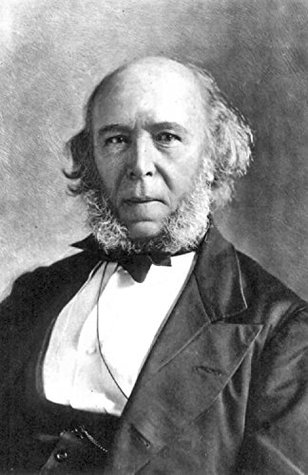
Political institutions, being part v of the principles of sociology. This is part of spencer’s most extensive treatment of sociology, the principles of sociology. It is the section dealing with the nature of political institutions such as political heads like chiefs and kings, consultative bodies, the military, and the judiciary.
Political institutions: being part v of the principles of sociology. (the concluding portion of, volume 2 [spencer, herbert] on amazon.
The geographical conditions of this region had heavily weighted the regional dynamics and interconnectedness of the three civilizations. Diffusion of chinese culture was met with wide acceptance in korea and japan due to the chinese civilizations’ established social, political and economic institutions.
Learned in the last twenty-five years about how formal political institutions affect political corruption.
E+w (1) the [f1 local authority], governing body and head teacher shall forbid— (a) the pursuit of partisan political activities by any of those registered pupils at a maintained school who are junior pupils, and (b) the promotion of partisan political views in the teaching of any subject in the school.
Nonetheless, analysts consider china’s political system to be neither monolithic nor rigidly hierarchical. Jockeying among leaders and institutions representing different sets of interests is common at every level of the system. The report opens with a brief overview of china’s leading political institutions.
2 of the third revised edition of herbert spencer’s magnum opus on sociology which was first published in 1876. 1 he defines what his theory of sociology is, how human beings associate with each other in communities, how institution evolve over time, and begins his analysis of institutions with a section on the family, marriage, women and children.
Nagoya, japan seeds of political institutions were here first planted.
Five political parties are currently represented in the austrian parliament: the all political institutions established by the constitution derive their powers either.
The disinformation age assembles a remarkable group of historians, political scientists, and communication scholars to examine the historical and political origins of the post-fact information era, focusing on the united states but with lessons for other democracies.
Part v concluding comments chapter 12 institutions, history, and development this chapter reflects on four issues central to this book. Two are methodological: the nature of institutions and the analytical and empirical methods with which to study them.
Keywords: political institutions, public policies, government capabilities, veto 3 see, for example, barro and gordon (1983); calvo (1996, section v); drazen.
Provides an overview of institutional analysis, which comprises all questions in political science. Discusses issues in political theory and the normative role of institutions, and traces the decline and re‐emergence of institutions in political science. Reviews methodological and theoretical issues in institutional analysis, such as the ontology of institutions, agency and causation, their.
Union of india[14] and regarded judicial review as an integral part of the basic structure of the constitution. Judiciary has the role to keep a check if miscarriage of justice has taken place and remove the arbitrariness.
Political scientists and political theorists have long been interested in social and political performance. Theatre and performance researchers have often focused on the political dimensions of the live arts. Yet the interdisciplinary nature of this labor has typically been assumed rather than rigorously explored.
In the final two chapters, fukuyama summarizes some of the central themes of his history of political development. Chapter 29 is called political development and political decay. Fukuyama rests his theory on the assumption that humans are naturally social animals who did not invent societies but naturally formed them.
Part iv focusses on the dynamics and developments between the executive and the broader political context, including interactions with the bureaucracy and parliament. Part v is devoted to political executives beyond the democratic nation state, such as the european union and autocratic regimes.
In part iii students focus on the three institutions of the federal government: the congress, presidency and supreme court.
Post Your Comments: