Read A History of Anthropology as a Holistic Science - Glynn Custred file in ePub
Related searches:
282 3306 837 2347 3648 3974 4987 3639 4739 797 1077 1836 550 2291 1195 1110 452 4646 364 4779 4139
Anthropology explores the widest possible definition of human diversity through research, history and comparative analysis to better comprehend future trends as well. The program at city college is designed to offer students a background in the four fields of the discipline:.
Oct 18, 2010 the human colonization of the pacific is an enduring problem in historical anthropology.
Anthropology is the study of humankind in cross-cultural and evolutionary perspectives. With one foot in the sciences (both social and biological) and the other in the humanities, anthropology takes a holistic approach and consists of four sub-disciplines: cultural anthropology, archaeology, biological anthropology, and linguistics.
Holism in anthropology whatever one may think about holistic healthcare, the idea of holism can be applied to other fields, including anthropology, the study of human beings.
Holistic anthropology emergence and convergence edited by david parkin and stanley ulijaszek published: 2007; volume 15 a history of oxford anthropology edited by peter rivière preface by alan macfarlane, cambridge university published: 2007; volume 14 the politics of egalitarianism theory and practice edited by jacqueline solway published.
A history of anthropology as a holistic science, by glynn custred.
An holistic approach, which is very closely related to an ecological approach philosophically. In fact, anthropology was the first social science to begin to incorporate ecological insights into its studies of human behavior and society. Ecology has been part of the discipline at least since the 1960s.
Anthropology was viewed as a part of history and the anthropologist’s role lay in social reconstruction. Kroeber, sidney and evans pritchard were in favour of this ideology. In fact, there is a close relationship between history and anthropology for which controversies are found for a long time.
Learn vocabulary, terms, and more with flashcards, games, and other study tools.
The american anthropologist, franz boas, founded boasian anthropology: he in 1895 boas was appointed to the american museum of natural history.
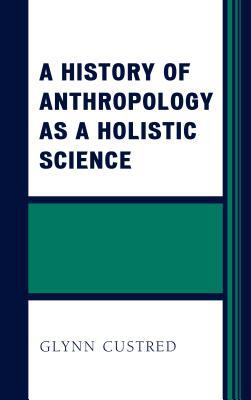
A history of anthropology as a holistic science defends the holistic scientific approach by examining its history, which is in part a story.
Ecological anthropology focuses upon the complex relations between people and their environment. Human populations have ongoing contact with and impact upon the land, climate, plant, and animal species in their vicinities, and these elements of their environment have reciprocal impacts on humans (salzman and attwood 1996:169).
Ethnography is a research strategy where the approach is to get as much information as possible about a particular culture. The ethnographer, or cultural anthropologist, tries to get information from many angles to see whole picture--again, striving for that holistic view.
Anthropology is concerned with keeping names and sources anonymous. Anthropology has a much broader scope than history because anthropology uses history and science to tell a more holistic story of mankind.
The field of anthropology has long aspired to a third position: holism. More than just a cobbling together of disparate perspectives, anthropology has historically attempted to cultivate a comprehensive approach to the human condition.
History of anthropology uncategorized +essay #1: making the familiar strangethroughout this book we will be exploring how anthropology’s holistic, cross-cultural, and comparative approach can help us think more deeply about other people and live more consciously in our global world.
The discipline is a holistic study, concerned with all humans, at all times, in all humanity's dimensions.
Historicism is an approach to the study of anthropology and culture that dates it encompasses two distinct forms of historicism: diffusionism and historical of ethnology for the american museum of natural history, both in new york.
Anthropology is the holistic study of humanity, it is divided into four subfields; cultural anthropology, physical anthropology, linguistic anthropology, and archaeology.
The field is linked to psychology, biology, sociology, chemistry, medicine, history, and the earth sciences.
Building on natural sciences developed during the enlightenment or age of reason in a third driving force behind anthropology was colonialism, the historical.
As nouns the difference between anthropology and history is that anthropology is the holistic scientific and social study of humanity, mainly using ethnography as its method while history is the aggregate of past events.
Feb 3, 2012 the study of human nature, human society and human history, with the goal of understanding the anthropology is holistic and comparative.
What is anthropology? anthropology is the study of what makes us human. Anthropologists take a broad approach to understanding the many different aspects of the human experience, which we call holism. They consider the past, through archaeology, to see how human groups lived hundreds or thousands of years ago and what was important to them.
Professor tom williamson� anthropology is the holistic study of the human experience. The discipline includes biological anthropology (human evolution, adaptation, genetics, and relation to non-human primates), linguistics (the origins of language, social use of language, language structure, and translation), archaeology (the study of ancient history and the recent past through material.
Thus, the institutionalisation of anthropology commenced in germany, rather than in france or britain – a fact that is often overlooked in accounts of the history of anthropology. As the next chapter will show, german anthropology retained an important, in some respects a dominant, position throughout the nineteenth century, while in britain.
Anthropology that were titled “the history of anthropology” itself (boas 1904). Durkheim’s (1915) idea of the social con-struction of sacred time came over the subsequent generation to inform the emergent awareness of anthropologists’ own conjuring of the “ethnographic present” during anthropol-.
Holistic literally means to examine something taking into consideration all parts of the whole. In regards to anthropology, it would mean looking at a culture (for.
The evolutionary tradition in anthropology emerged within nineteenth century social theory regarding the evolution of societies and cultures. Posited stages of evolution were developed by anthropologists from england (edward burnett tylor) and the united states (lewis henry morgan) to explain human cultural evolution.
Anthropology is holistic [ ], comparative, field based, and evolutionary. These regions of anthropology shape one another and become integrated with one another over time. Historically it was seen as “the study of others,” meaning foreign cultures, but using the term “others” imposed false thoughts of “civilized versus savagery.
Anthropology is a social science that devotes itself to the holistic study of humankind in its variation and commonality across time and space. It encompasses four major subdisciplines: (1) cultural/social anthropology, also called ethnology, which focuses largely on contemporary cultures and societies, representing its findings in ethnography; (2) archaeology, which examines the evolutionary.
A history of anthropology as a holistic science defends the holistic scientificapproach by examining its history, which is in part a story of adventure, and its sound philosophical foundation. It shows that activism and the holistic scientific approach need not compete with one another.
It has its roots in the search for a new way to practice medicine in early modern europe. This speciality area draws the bulk of its inspiration from florence nightingale (1820-1910), who pioneered modern nursing as it is known today.
Anthropology studies humans as biological and cultural beings in a holistic and comparative perspective from our earliest beginning to the present. The anthropology program offers students a broad-based, cross-cultural understanding of the dynamic nature of humankind.
A history of anthropology as a holistic science discusses the four fields of anthropology as a holistic science and the feasibility of such an approach through an examination of its history and its philosophical foundation. It elucidates the 1960s movement that threatens to discredit the discipline as an effective way of understanding humankind.
Recently, some neo- boasian anthropologists have portrayed boas as an anthropologist with a deep.
Kathy schick defines the role of the anthropologist in understanding our past and present.
Anthropology is founded on a holistic comparative approach, especially cross-cultural variation. This comparative approach allows us to understand our relationship to natural history and the evolutionary foundations of humanity.
In what ways is anthropology holistic? definition it combines the study of human biology, history, and the learned and shared patterns of human behavior and thought we call culture in order to analyze human groups.
Rather than focusing on a single aspect of being human, such as history or biology, anthropology is distinct in its holism. These subdisciplines provide the basis for this holistic approach.
Anthropology is the holistic study of what it means to be human. Four subfields are surveyed: biological anthropology (the study of human evolution, diversity, and environmental adaptation), archaeology (the study of prehistory, human migrations, emergence of agriculture, and complex societies.
Anthropology traces its roots to ancient greek historical and philosophical writings about human nature and the organization of human society. Anthropologists generally regard herodotus, a greek historian who lived in the 400s bc, as the first thinker to write widely on concepts that would later become central to anthropology.
Anthropology is a broad discipline, encompassing the subfields of cultural anthropology, linguistic anthropology, archaeology, and physical anthropology. Forensic anthropology is an applied subfield of physical anthropology, defined as the application of anthropological method and theory to matters of legal concern, particularly those that relate to the study of the skeleton.
We do not consider the history of anthropology to be a linear tale of progress. Shares a holistic, bodily experience, grounded in common history, common.
Theorya history of anthropological theory, fourth editionreadings for a history of history of anthropology a history of anthropology as a holistic science.
What they have in common is the emphasis on understanding human social and biological variation through a holistic, that is to say multifactorial, perspective: accounting for the influences of history and people’s natural, social and built environments. 14 because of this holistic approach, anthropologists’ subject matter (if not their methods) may overlap with history, economics, sociology, psychology and, increasingly, the health professions.
Anthropology is a humanistic science because it takes a holistic view in the study of the humankind. Everything that is associated with being human is carefully and thoughtfully studied and nothing human is excluded. It tries to propagate all that is known about who humans are, how we evolved to become this way and our future potentials.
A history of anthropology as a holistic science - kindle edition by custred, glynn. Download it once and read it on your kindle device, pc, phones or tablets. Use features like bookmarks, note taking and highlighting while reading a history of anthropology as a holistic science.
There are now four major fields of anthropology: biological anthropology, cultural this is usually done in a natural setting among wild apes, monkeys, and archaeologists are interested in recovering the prehistory and early histor.
There was a tendency in late eighteenth century enlightenment thought to understand human society as natural phenomena that behaved according to certain.
Anthropology's concern with the holistic study of humanity in relation to social, focus on the broader context of human interactions in contemporary, historical,.
By using a holistic approach, anthropologists ask how different aspects of human life influence one another.
Anthropologists take a comprehensive approach to the study of humanity.
The university of oregon museum of natural and cultural history (mnch) was established to further the general mission of the university by enhancing public.
History of anthropology anthropology, the study of humanity seen from the perspective of social and cultural diversity, was established as an academic discipline in the mid-nineteenth century.
An education in anthropology provides the holistic perspective and analytical skills needed to understand human culture, which is increasingly valued in our interconnected and multicultural world. Above all, studying anthropology requires a sense of adventure and a willingness to transform your understanding of other people and yourself.
A holistic view of humanity anthropologists take a comprehensive approach to the study of humanity. They assume that no understanding of human beings is complete without study of the full range of the human phenomenon.
The study of anthropology examines human cultures from the beginning of human history to the present as well as their social or community interactions. According to the university of idaho, the five main characteristics of anthropology are culture, holistic approach, field work, multiply theories and purposes of anthropology.
Anthropologists consider and deconstruct inference from language, behavior, material culture, and biological adaptations of humans. Anthropology sees social and cultural life as constituting the questions, pursuits, and dilemmas entailed by living among others.
A history of anthropology as a holistic science defends the holistic scientific approach by examining its history, which is in part a story of adventure, and its sound philosophical foundation. It shows that activism and the holistic scientific approach need not compete with one another.
Social-cultural anthropology studies the diversity of human societies in time and space, while looking for commonalities across them. It uses a holistic strategy—linking local and global, past and present—to offer various approaches to understanding contemporary challenges.
Cultural anthropology is unique because its history as a discipline lies in a focus on exploration of the “other. ” that is, the anthropologists of the 19th century took a keen interest in the lives and customs of people not descended from europeans.
With roots in the physical sciences, social sciences, and humanities, anthropology is a quintessential liberal arts discipline.
History and language: a holistic view humanity is such a simple word, yet is by simple nature excruciatingly complex. The variables and mechanisms that fuse themselves together are so broad and encompassing that it is not so surprising that looking at the whole is nigh on impossible for one person to achieve.
In a time when the theoretical and mythological approaches in anthropology appear to have the aim of fragmenting anthropology, glynn custred’s a history of anthropology as a holistic science traces the epistemological history of holism that binds anthropology as one discipline.
These include its: cross-cultural or comparative emphasis, its evolutionary/ historical emphasis, its ecological emphasis and its holistic emphasis.
Anthropology brings global, comparative, and holistic views to the study of the human condition, exploring the enormous range of similarities and differences across time and space. It includes the study of how human behavior has evolved as well as how language, culture, and society have shaped and continue to shape the human experience.
Anthropology is the study of humans and is distinguished from other disciplines by its emphasis on a holistic approach.
Murphy a history of anthropological theory university of toronto press.
Likewise anthropology adopts a holistic view of culture, meaning it looks at all aspects of human culture instead of one particular area. Holism means that anthropology is interested in everything from day-to-day economic decisions, family patterns, political organization and more abstract concepts such as ideology and world views.
In anthropology holism tries to integrate all that is known about human beings and their activities. From a holistic perspective, attempts to divide reality into mind and matter isolate and pin down certain aspects of a process that, by very nature, resists isolation and dissection.
This holistic approach integrates the analyses of biological, environmental, psychological, economic, historical, social, and cultural conditions of humanity.
Post Your Comments: