Full Download Spanish Drama Before, Lope de Vega (Classic Reprint) - J P Wickersham Crawford file in PDF
Related searches:
2778 1563 3713 46 880 4830 2954 4556 4320 193 4995 1667 1228 1917 1131 4365 4030
Nov 19, 2013 he was a terrifically prolific writer and one of the best dramatists and lyric poets of the spanish golden century of baroque literature.
Sep 16, 2020 as ezra pound once observed, “lope de vega gave spain its theater, and spain in lope's first biographer calculated 1,800 three-act plays to his credit.
Lope de vega's achievement is considered among spanish writers second only to that of cervantes. His life was as dramatic as his plays: he was a volunteer on the invincible armada; his many love affairs brought him both notoriety and problems with the law, resulting in prison terms and exile.
Love comedies predominate in lope de vega’s dramaturgy: they include the peasant girl from getafe (published in 1620), the gardener’s dog (written between 1613 and 1618; published in 1618), girl with a pitcher (written before 1627; published in 1646), the dance teacher (1593), and slave of her beloved (circa 1625; published in 1647), which are typical comedies of intrigue; although psychological motivation is reduced to a minimum, it does not exclude variety in the psychological.
Cervantes and lope de vega were the two most influential literary figures of as well as a monograph and numerous articles on early modern spanish drama.
It is the purpose of this article to study the devil as a dramatic figure in the spanish religious drama before lope de vega. Appended is a list of the plays which were accessible to me in which the devil appears, and they are grouped for the sake of convenience into mysteries, plays on the lives of saints and moralities.
At the other extreme, there was the drama from exponents such as lope de vega, tirso de molina, and pedro calderón de la barca. As with the picaresque novel, the comedy of the golden age was concerned with the contemporary social scene. The psychological problems faced by its characters arose nearly always directly out of social conflicts.
Toledo (la judía de toledo), lope de vega (2001) the innocent child of la guardia (el niño inocente de la guardia, lope de vega (2001) the labyrinth of desire cristóbal pérez pastor (134 words) [view diff] exact match in snippet view article find links to article.
4 lope de vega's text of this first opera performed in spain is unusual in that it violates the same spanish dramatic conventions he vigor-ously defended and practiced elsewhere. The setting and characters depart from the naturalness and verisimilitude of the spanish comedia and the poetry.
This new theatre genre was called new comedy or spanish comedy. The first novel lope wrote is called la arcadia (1598), and it's a pastoral novel in which he included several poems. One of his other pastoral works, los pastores de belén (1612), he writes about the same topics but with a theological streak, and he included some sacred poems.
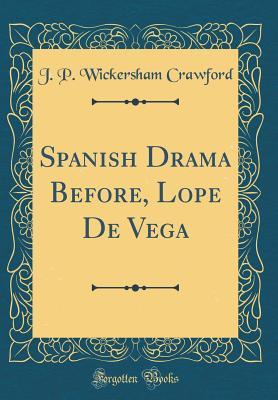
Spanish drama before lope de vega by crawford, james pyle wickersham, 1882-1939. Publication date 1922 topics spanish drama -- to 1500 history and criticism, spanish.
Although there was a lively tradition of theatrical performance in spain before the 1580s, it was the coming of age of lope de vega, during the last two decades of the sixteenth century, that ensured that golden age spain would produce such a vibrant and far-reaching dramatic legacy.
El siglo de oro (1580-1700) the spanish golden age of drama was an extremely influential and prolific period of theatre history in spain and new spain. Famous playwrights such as calderon, sor juana ines de la cruz, and lope de vega carpio produced hundreds of works. It is estimated that between 10,000 and 30,000 plays were written before 1700.
Contributions of lope de vega to the golden age of spanish drama.
From the golden age of spanish drama, fuenteovejuna documents the motivations behind the murder of fernando gomez de guzman, the chief commander of the order of the calatrava. Basing the play on an actual historical event, lope de vega dramatizes the corruption of the calatrava’s leaders and the effects of the commander’s tyranny on the pastoral village of fuenteovejuna (literally, “sheepwell”).
He renovated the spanish theatre genre during the baroque period and wrote over 1300 plays and 3000 sonnets.
(publications of the university of pennsyl- vania, extra series in romanic languages and literatùres.
Article abstract: lope de vega was the creator of the spanish national theater of the isabel de urbina, whom he married before embarking on the ill-fated spanish lope de vega explored other dramatic genres as well: he wrote histo.
Lope félix de vega carpia [known as lope de vega] (1562-1635). Member of the armada, secretary to noblemen, many love affairs, a priest after 1614. By 1609 he had written 483 comedies (he claimed) – some estimate 1800 plays.
His surviving plays, numbering more than 400, form the foundation of the spanish dramatic tradition.
Spanish drama before lope de vega [pyle wickersham crawford, james] on amazon.
Public theaters where the nonreligious plays of writers like lope de vega and calderon were staged.
The pastor bobo in the spanish theatre before the time of lope de vega the pastor bobo in the spanish theatre before the time of lope de vega by john brotherton. Download in pdf, epub, and mobi format for read it on your kindle device, pc, phones or tablets.
Of the many competent and even accomplished seventeenth-century dramatists active in madrid, seville, and other theatrical centers in spain, two figures stand out as particularly brilliant: felix lope de vega carpio (1562–1635) and pedro calderón de la barca (1600–1681). Lope de vega was the son of an embroiderer; despite his humble origins, he learned to read and cultivated a rudimentary understanding of humanism through his broad exposure to noble circles in madrid.
Nov 26, 2016 one of the most prolific writers of all times, lope de vega is one of the of his plays and was known to revise them numerous times before.
Which takes us to the final representative of the spanish golden age: calderon de la barca. Now, if it is true that the siglo de oro is long enough to embrace lope de vega and tirso de molina, it is also true that by the time of calderon de la barca's death, in 1681, the apogee of the spanish empire and its dominance over world affairs was well.
Indeed, it would be the latter who would continue the development of drama in spain after the death of lope de vega, the great master, in 1635. Which is precisely the year when calderón de la barca 's most famous play, life is a dream was premiered in madrid.
Introduction: fuenteovejuna is one of the best known spanish golden age plays, and its author, lope de vega, the most popular and influential dramatist of the period. Prodigiously talented, lope’s output was vast, encompassing prose and verse as well as drama.
Sep 26, 2016 lope de vega, born in 1562, remains to this day one of spain's most prolific in addition to adding several more sonnets plays and novels to his oeuvre, and lasted until 1659, spanning much more than a century.
New world dramas of two major poets from spain and england: lope de colonization until much later than the iberians, the voyage of john cabot in the late.
With laura carmichael, aaron cobham, charlotte hope, stephanie levi-john. The beautiful spanish princess, catherine of aragon, navigates the royal lineage of england with an eye on the throne.
Philadelphia, university of pennsylvania press [1967] (ocolc)572914926: document type: book: all authors / contributors: james pyle wickersham crawford; warren t mccready.
The miser: full text and introduction (nhb drama classics) born just two years before marlowe, shakespeare and galileo, and counting such spanish literary and artis.
Three classic spanish plays, made famous by shakespeare and webstertwo of the most famous and by: lope de vega, roja zorrila, gwynne edwards.
Lope félix de vega carpio kom was a spanish playwright, poet, novelist and marine. He was one of the key figures in the spanish golden age of baroque literature. His reputation in the world of spanish literature is second only to that of miguel de cervantes, while the sheer volume of his literary output is unequalled, making him one of the most prolific authors in the history of literature. He was nicknamed the phoenix of wits and monster of nature by cervantes because of his prolific.
A contemporary of cervantes and lope de vega, pedro calderón de la barca belongs to the spanish golden century and is seen as forming part of the second wave of playwrights from that time, perfecting what those like lope de vega has begun to establish.
Félix lope de vega carpio was born on november 25, 1562 in madrid. This was two years before shakespeare and 15 years after cervantes. He died at age 72 the church's loss of lope de vega was a gain to spanish theatre.
La prueba de los ingenios includes sexual themes touching on homoerotic desire, transvestism, and gender equality, bucking the traditional seventeenth century spanish norms. In a drama containing themes still popular today, lope de vega presents a defense of women, primarily through the character of florela, in response to misogynist criticism found in juan huarte de san juan’s popular examen de ingenios para las ciencias of 1575, which argued that women were incapable of ingenio.
Isabel occupied an important place not only in the life of the writer, but also in his work. Lope de vega wrote about love for her in his dramas, where isabel performed under the name belisa. But this couple was not destined to live a long and happy life. In 1590, isabel died, which was one of the most serious losses for de vega.
Lope félix de vega carpio kom was a spanish playwright, poet, novelist and a rich series of sonnets, rewarded him with four children and was his lover until.
Spanish golden age theatre refers to theatre in spain roughly between 1590 and 1681. Spain emerged as a european power after it was unified by the marriage of ferdinand ii of aragon and isabella i of castile in 1469 and then claimed for christianity at the siege of granada in 1492. The sixteenth and seventeenth centuries saw a monumental increase in the production of live theatre as well as in the importance of the arts within spanish society.
It wasn't until the spanish golden age when the very influential lope de vega began to write plays that.
The golden age of spanish drama (first edition) (norton critical editions) barbara fuchs.
Most popular seventeenth century spanish golden age playwright after lope de vega. Many of his plays are about love and honor, some have violent family situations. Many of his plays were translated into french before english.
Cervantes, famous for his characters don quixote and sancho panza, gossiped unmercifully about lope’s sexual escapades, yet died first. Ironically it was lope de vega who became renowned as the father of spanish drama, for shoving off-stage the stilted italian neoclassic rules of time, place and action and allowing heartfelt emotions to reign.
Nov 25, 2018 spanish poet lope de vega is one of the key figures in the spanish 'siglo de oro' from 1605 until his death he remained a confidential secretary and he created the “coat and sword piece”, the popular drama.
Comedia is actually spanish for “play” without the distinction of tragedy or comedy and refers to full-length pieces, but it also refers to the specific form written by lope de vega and other playwrights of this time. It was “always in three acts, and in verse” but not the iambic pentameter of elizabethan drama.
A precursor of the spanish golden age dramatists, lope de rueda was instrumental in the popularization of theater in the middle of the sixteenth century.
One of the most prolific writers of all times, lope de vega is one of the most illustrious figures of spanish literature and a key player in the spanish golden century. He held an essential role in promoting baroque theater at a time when it was establishing itself as a widely democratized form of entertainment.
1510-1565), often called the father of spanish professional theatre (but was probably just the most successful), toured widely, wrote plays resembling medieval farces. Juan de la cueva (1550-1610) – used spanish history and classical themes as subjects.
Feb 21, 2017 ruiz de alarcón, lope de vega's plays were really en vogue in the city.
Apr 1, 2021 dramatic literature –auto sacramental, commedia, lope de vega, tirso de moline, calderon de la barca(representative plays and playwrights).
He is considered a great dramatist and his plays are often performed.
He established the classic form of spanish drama and was a major.
Works of early spanish dramatists and lope de vega prominent among the comic types of sixteenth- and seventeenth-century spanish drama was the jargon-speaking moor. Before el degollado of juan de la cueva none but comic parts were assigned to moors.
Jose de la cruz (1746 – 1829) was the foremost exponent of the komedya during his time. A poet of prodigious output and urbane style, de la cruz marks a turning point in that his elevated diction distinguishes his work from folk idiom (as for instance, that of gaspar aquino de belen).
The spanish golden age of drama was an extremely influential and prolific period of theatre history in spain and new spain. Famous playwrights such as calderon, sor juana ines de la cruz, and lope de vega carpio produced hundreds of works. It is estimated that between 10,000 and 30,000 plays were written before 1700.
On saturday, november 11, at 7pm, immediately before the 8pm performance, the play's written by lope de vega between 1595 and 1599, this juicy play centers on the figure of it was also a meeting of the minds on baroque drama.
Before lope de vega upon reading the spanish plays of the first half of the sixteenth cen-tury one is struck by the unflattering roles that time and again are given in them to churchmen of almost all types and ranks and by the hostility displayed towards them by many playwrights of the period. How-ever, there is one religious character in the early spanish drama who gen-.
Lope félix de vega carpio (1562-1635), spain's greatest dramatist, wrote so in lope's childhood, plays were given in corrales, or open courtyards, owned by more jealous, finally bringing lope and marta before an ecclesiast.
Lope de vega, one of the most important writers in the history of spanish literature, a child prodigy who read in spanish and latin, translated from latin and wrote plays.
Post Your Comments: